
Every day, thousands of animals move across the borders between Benin, Togo and Burkina Faso to supply markets and support livestock value chains. Despite strict regulations, cross-border movements, some of them informal, continue, driven by commercial opportunities. This mobility is essential for pastoralists, but it also comes with significant animal health risks. Faced with this challenge, the three countries are joining forces to develop a coordinated response.
Diseases do not stop at borders
Every day, cattle, sheep, goats and poultry cross national borders. These movements can facilitate the spread of transboundary animal diseases such as Peste des Petits Ruminants (PPR) and Contagious Bovine Pleuropneumonia (CBPP).
According to the FAO, PPR affects more than 200 million small ruminants in West Africa. The disease can cause mortality rates of up to 80%, resulting in considerable economic losses. Yet average vaccination coverage remains below 35%.
Several factors explain this low coverage. Access to veterinary services remains limited, while countries do not always coordinate their national vaccination campaigns sufficiently across borders. As a result, diseases continue to spread from one country to another.
A regional workshop to harmonise vaccination campaigns
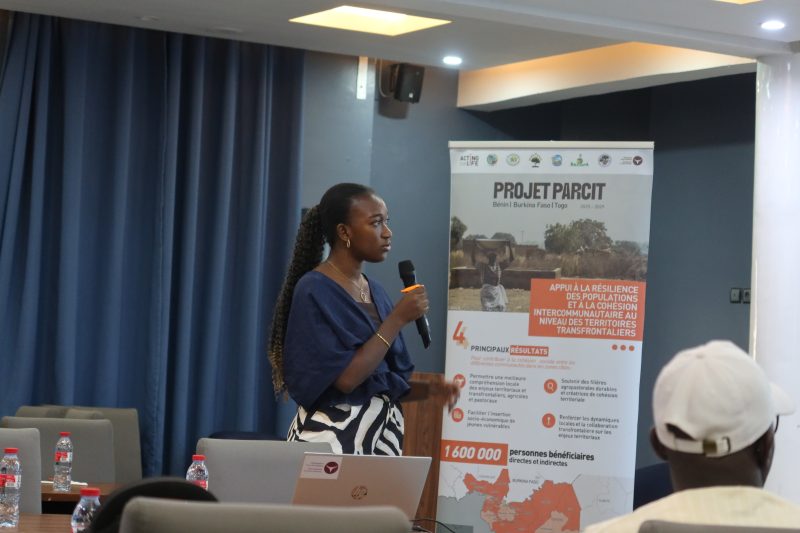 To address this challenge, the EU-funded project “Projet d’Appui à la Résilience des populations et à la Cohésion Intercommunautaire au niveau des territoires Transfrontaliers (PARCIT)” plans three synchronised vaccination campaigns in northern Benin, the east-central region of Burkina Faso and northern Togo to limit the spread of PPR and CBPP.
For these campaigns to be effective, however, they need to be coordinated. This was the central objective of a regional workshop held in Cotonou on 1 and 2 July 2026. Over two days, veterinary services from the three countries, livestock keepers’ organisations, private veterinarians and several technical partners worked together to define a common strategy.
For Benjamin I. OROU, PARCIT Project Coordinator, this mobilisation marked an important step: “One of the main successes of this regional workshop was the mobilisation of all the key actors from the three countries concerned. (…) Achieving such broad participation was a challenge, but it enabled us to establish a genuine framework for consultation between the different actors.”
Understand, compare and harmonise: at the heart of the workshop
During the workshop, participants compared practices across the three countries. How does each country organise its vaccination campaigns? What obstacles do they face? And which good practices are already in place? The discussions showed that each country already has its own national vaccination system. However, participants agreed that a harmonised approach across borders is essential.
Together, they identified several priorities:
- synchronising vaccination schedules;
- organising campaign logistics and operations;
- vaccine supply and management;
- awareness-raising and mobilisation of pastoralists;
- clarifying roles and responsibilities;
- monitoring and evaluation systems and the sharing of animal health data.
For Grâce TAOUEMA, PARCIT Project Supervisor, this stage also provided a clearer understanding of realities on the ground: “As a project team, we were able to gain first-hand insight into the concrete realities of each area involved in this PARCIT activity. Its cross-border nature makes it a particularly unique initiative.”
Concrete results and new momentum
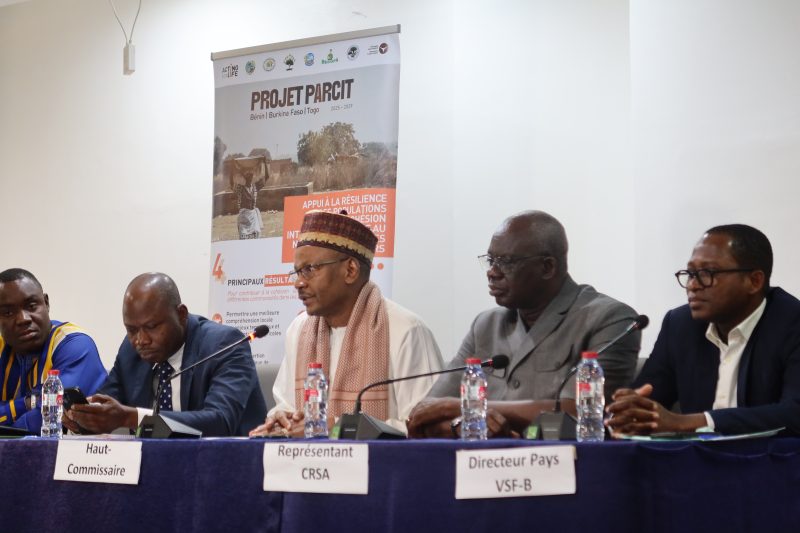 At the end of the workshop, an action plan and roadmap were developed. They take into account the specific situation in each country, the targeted cross-border areas, the number of animals to be vaccinated, and the animal health and security contexts.
For Mouhamadou ABOU, Technical Assistant for Animal Production and Health at Vétérinaires Sans Frontières Belgium, the workshop represented an important turning point: “I am extremely satisfied with how this workshop was organised. It not only brought together the different actors responsible for animal health in the three countries, but also laid a solid foundation for organising vaccination campaigns in the cross-border area (…) and strengthened cooperation between the animal health authorities of the three countries.”
Ultimately, this collective, territory-based prevention strategy is essential to curb the spread of transboundary animal diseases. By harmonising action across countries, prevention becomes more effective and coherent. According to PARCIT Project Coordinator Benjamin I. OROU, these results represent: “a decisive step towards improved coordination and the sustainable strengthening of efforts to control transboundary animal diseases across the area shared by the three countries.”
The PARCIT project, funded by the European Union, is coordinated across the three countries by Acting for Life. The views and opinions expressed are solely those of the author(s) and do not necessarily reflect those of the European Union, Air France or Acting for Life. Neither the European Union, Air France nor Acting for Life can be held responsible for them.