

Since 2022, Vétérinaires Sans Frontières Belgium and Doctors of the World have been deploying a community-based epidemio-surveillance system in eastern DRC, around Kahuzi-Biega National Park, a “hotspot for the emergence of pandemics.” Although the Ebola outbreak has just been declared, we were already prepared. Our system, based on the One Health approach, operates continuously. It is playing a key role today in the response to the Ebola outbreak.
An integrated community-based surveillance system grounded in One Health to fight zoonoses
In recent years, the Congolese population has been increasingly affected by outbreaks: Mpox, Rift Valley Fever, Brucellosis… All share a common feature: they are zoonoses, diseases transmitted from animals to humans. Today, 60% of human infectious diseases are zoonotic in origin, a phenomenon exacerbated by ecosystem degradation and pollution.
Because they lie at the interface between human, animal, and environmental health, these diseases require a holistic response. This is the essence of the One Health approach, which we have been implementing for several years. Promoted by the World Health Organization since the early 2000s, it recognizes the interdependence of the three health domains. It is now established as one of the most effective strategies for preventing zoonoses.
 Community-based integrated surveillance is one of the pillars of the One Health approach. Doctors of the World focuses on human and environmental health issues, while VSF-B concentrates on animal health. Among the actors involved in this component are six veterinarians and more than 176 Community Animal Health Workers (CAHWs). They all come from local communities, and are present every day in often very remote areas. They rapidly detect and report any suspected health event, including epidemics.
 Their role also includes awareness-raising and community engagement in the fight against zoonotic diseases. They explain health risks, modes of transmission, and preventive behaviours. CAHWs are recognized by both authorities and local populations. Their strong local anchoring facilitates risk communication: their messages are better understood and more readily accepted, which strengthens the effectiveness of prevention.
An effective and cost-efficient system to respond to the Ebola outbreak
Our surveillance system operates in permanent monitoring mode and is activated in case of an alert. It has already been deployed during Mpox and Rift Valley Fever outbreaks in 2024. Today, it is fully engaged in the response to the Ebola outbreak affecting eastern DRC, particularly in Ituri and North Kivu. The outbreak has now also reached South Kivu, in the Miti-Murhesa and Katana health zones. To date, three Ebola virus disease cases have been confirmed and one death has been recorded in the Miti-Murhesa health zone, in Kabare territory.
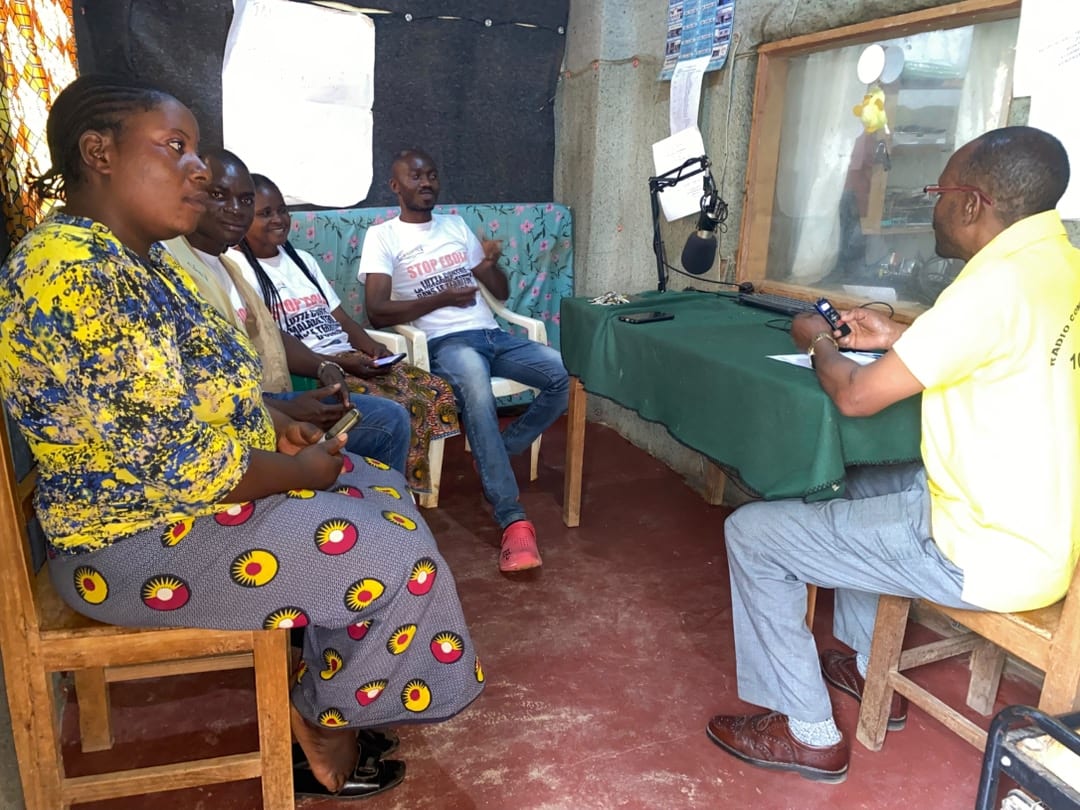 Veterinary teams, CAHWs, and One Health committees are carrying out prevention and awareness activities to limit the spread of the virus, particularly in gathering points such as schools, churches, markets, and livestock markets. Prevention relies on providing personal protective equipment for healthcare staff, installing handwashing facilities in health structures, and distributing hydroalcoholic solutions. It also includes educating livestock keepers on hygiene and regular handwashing after any animal handling. To strengthen risk communication and community engagement, key messages are broadcast on community radio stations and awareness tools have been distributed to CAHWs.
Their long-standing presence and integration within communities help avoid tensions with response teams—sometimes targeted, as recently seen in Ituri—and foster community engagement.
 This proximity-based system is both effective and cost-efficient. It stands in stark contrast to emergency responses, which require massive resources once an outbreak has already taken hold. Without a fundamental shift in how we approach health, we will remain trapped in a cycle of successive crises, always reacting, never preventing.