
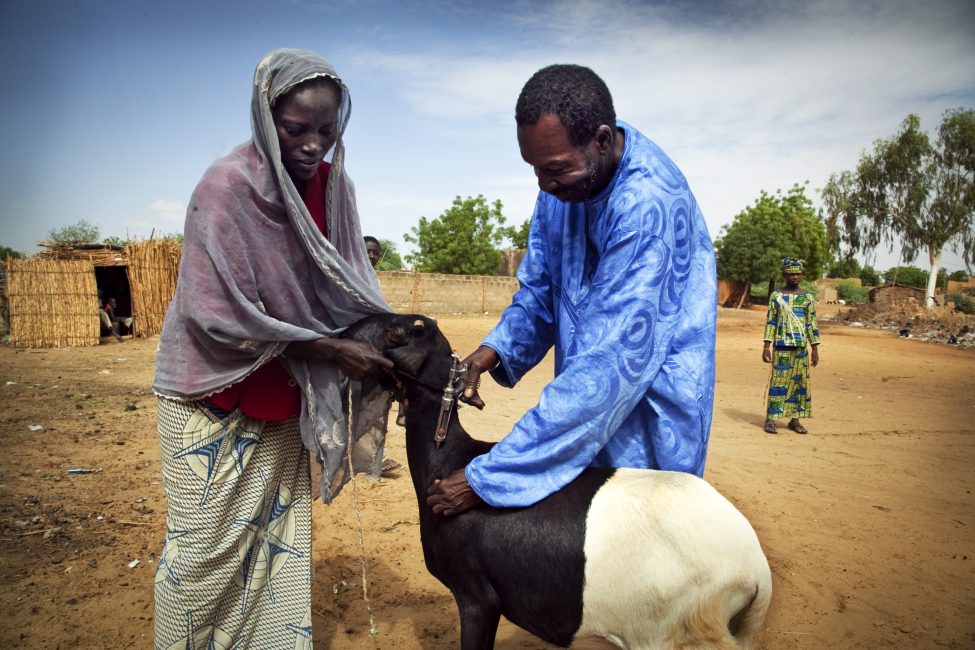
In the Sahel regions of Niger, animal health is far more than a technical issue. It is essential to the economic survival and food security of millions of families. Yet ensuring pastoralists have continuous access to high-quality, locally adapted veterinary services remains a major challenge. Nearly 23 million Tropical Livestock Units (TLUs) are spread across a vast territory of more than one million square kilometres. Under these conditions, conventional private veterinary practice alone cannot meet the needs. This raises a simple question: how can livestock health be protected, even in the most remote areas? The answer lies in the Local Private Veterinary Services (LPVS) programme, which has transformed the way veterinary care is delivered.
A model created to fill a critical gap

© Tim Dirven
Before 2003, veterinary services were concentrated in agricultural areas and around the capital, leaving pastoral regions with little or no access to animal healthcare. This gap encouraged the informal trade in veterinary medicines and weakened animal health systems.
To address this challenge, Vétérinaires Sans Frontières Belgium and its partners developed the Local Private Veterinary Services (LPVS) programme. Its objective is clear: to provide accessible, reliable and locally adapted veterinary services through private veterinarians established in rural areas and Community Animal Health Workers (CAHWs) trained within local communities.
The programme is built on the recognition that local communities are best placed to monitor animal health on a daily basis, detect diseases early and ensure continuity of care. Twenty years later, the results speak for themselves. 39 private veterinarians, more than 1,500 Community Animal Health Workers, and a network that now covers 27% of Niger’s national territory.
Transforming access to veterinary care

© Tim Dirven
The LPVS programme has fundamentally transformed access to veterinary services. Where a single veterinarian once had to cover hundreds of thousands of animals, Community Animal Health Workers now provide a daily presence, with an average ratio of one worker for every 10,727 Tropical Livestock Units. Pastoralists no longer have to travel dozens of kilometres to obtain medicines or professional advice. Veterinary services are now available within villages, vaccination campaigns are better coordinated, and trust in veterinary care has steadily grown.
The figures speak for themselves. Today, 88% of vaccinations against Peste des Petits Ruminants (PPR), 74% of vaccinations against Contagious Bovine Pleuropneumonia (CBPP) and 74% of vaccinations against camel pasteurellosis are delivered through the LPVS programme. In some areas, vaccination coverage has increased sevenfold for CBPP and threefold for PPR. The impact extends far beyond animal health alone. It is a quiet revolution that protects livestock, improves productivity and directly strengthens the food security of pastoral communities.
Remarkable resilience in the face of insecurity
The strength of the LPVS programme is perhaps most evident in areas affected by armed insecurity. For more than a decade, roads have become dangerous, movement has been restricted and some areas have become inaccessible. Yet Community Animal Health Workers continue to operate. They rely on market transport, trusted intermediaries, insulated vaccine carriers and solar-powered cold chain systems to ensure vaccines safely reach even the most remote communities.
Despite these challenges, in 2025 alone, 749 teams of Community Animal Health Workers vaccinated 25 million animals across 46 districts, benefiting nearly 2 million pastoralists. In a context where service delivery could easily collapse, they ensure that veterinary care continues uninterrupted.
Looking ahead: strengthening and expanding a proven model
Today, the LPVS programme has established itself as an essential component of Niger’s animal health system. After twenty years, it has demonstrated that a locally rooted, well-structured and participatory network can sustainably improve animal health while strengthening the livelihoods of rural communities.
The programme works. It now deserves to be strengthened, expanded and recognised as a cornerstone of both animal and public health.
Read the full article here (only available in French).